What Is Beta Alanine and Should You Avoid It?
If you've ever taken a pre-workout and felt your skin crawling, your face flushing, or that weird pins-and-needles tingle — you've felt beta alanine. And if you've ever wondered whether that feeling means it's working, the short answer is: no.
Here's everything you actually need to know about beta alanine, why it's in almost every pre-workout, and whether you should be looking for something without it.
What Is Beta Alanine?
Beta alanine is a non-essential amino acid — meaning your body produces it on its own and you don't need to get it from food or supplements. When you take it in concentrated doses, it combines with another amino acid called histidine to form carnosine, which is stored in your muscles.
Carnosine acts as a buffer against lactic acid buildup during exercise, which in theory can help you push through fatigue during high-intensity efforts lasting 1–4 minutes — think sprints, rowing intervals, or high-rep sets.
So Does It Actually Work?
A meta-analysis published in the journal Amino Acids found that beta alanine supplementation can modestly improve performance in exercises lasting 60–240 seconds. You can read the research summary on Examine.com, which is one of the most respected independent supplement research databases around.
For that kind of training, the evidence for beta alanine providing meaningful benefit is weak at best. A review in the Journal of the International Society of Sports Nutrition noted that its benefits are highly dependent on the type and duration of exercise — you can verify this through PubMed, the National Library of Medicine's research database.
Then Why Is It in Everything?
Great question. The honest answer is that it tingles — and tingling sells.
When consumers feel something happening, they assume the product is working. Beta alanine produces a very noticeable sensation called paresthesia, which is a harmless but hard-to-ignore flushing and prickling of the skin. It starts in the face and neck and spreads from there. It's not dangerous, but it has nothing to do with performance.
Supplement companies learned quickly that customers who felt the tingle left better reviews, bought again, and told their friends. The tingle became a feature. Whether it helped you train better was almost beside the point.
Is It Dangerous?
No — beta alanine is not harmful. At the doses found in most pre-workouts (typically 1.6–3.2g), the main side effect is the tingling, and it fades within 30–60 minutes. Some people barely notice it. Others find it genuinely distracting and uncomfortable.
For experienced lifters, the tingle tends to become more annoying over time, not less. You've already figured out that discomfort doesn't equal effectiveness — so the sensation just becomes noise.
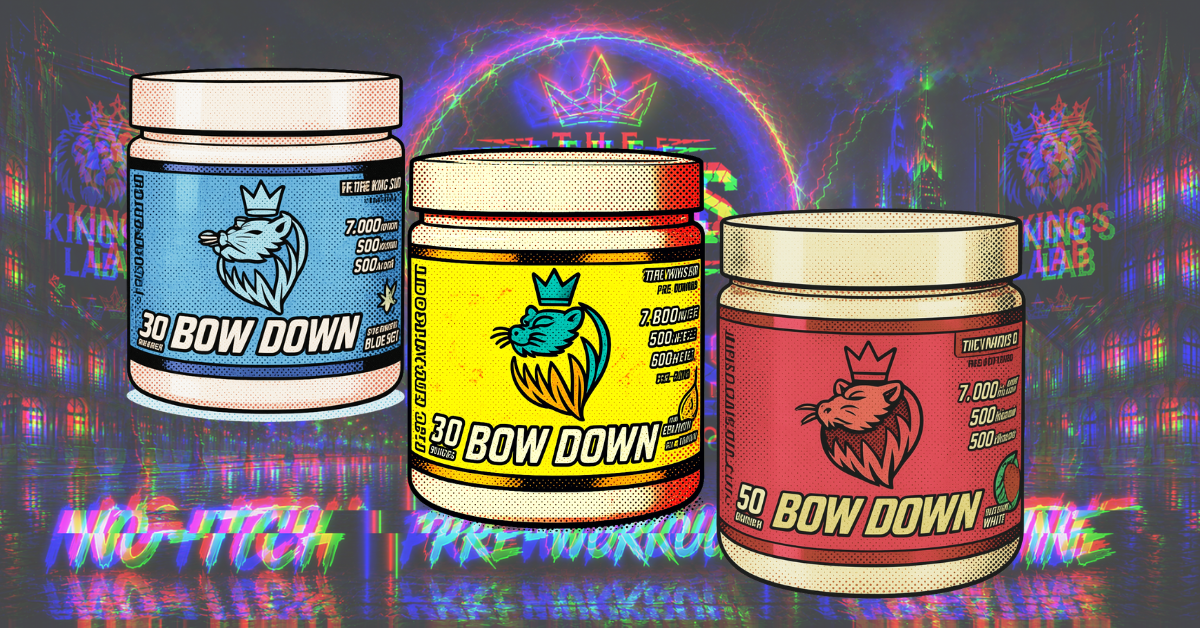
Why We Left It Out of Bow Down
At the King's lab, we built Bow Down for people who've moved past the placebo phase. You don't need your skin to crawl to know you're about to have a good session. You need clean, sustained energy, tunnel-vision focus, and a formula you can actually trust.
So we cut beta alanine entirely and focused on what actually drives performance in the gym: smooth stimulation, real nootropic support, and no crash. Same drive, same intensity — without the distraction.
If you've been tolerating the itch because you thought it meant something, it's time to try something better.
The Bottom Line
Beta alanine isn't a scam — but it's been massively oversold. For most gym-goers, its benefits are marginal at best, and the side effect (paresthesia) is often mistaken for proof it's working. If you train for strength, hypertrophy, or general fitness, you're probably not in the population that benefits most from it.
The tingle isn't the work. The work is the work.
→ Try Bow Down — Pre-Workout Without the Itch

Written by Max Bowlin